Neural computation
How do large populations of cortical neurons implement memory, decisions, and behavior? I develop low-dimensional theories and data-constrained recurrent models that can be compared with recordings and perturbations.
Joint Postdoctoral Scholar at the Kavli Institute for Theoretical Physics and the Geometric Intelligence Lab, UC Santa Barbara
I study how biological and artificial neural networks implement computation. My work combines dynamical systems, optimization, and large-scale neural data to make learning and memory mechanisms interpretable.
I work at the intersection of neuroscience, theoretical physics, and computer science. I combine mathematical theory, machine learning, and brain-imaging data to understand how distributed neural activity produces learning and memory. I use the same principles to make artificial neural networks more interpretable.
At UC Santa Barbara, I work with Boris Shraiman on modeling morphogenesis using AI, focusing on how local interactions among cells give rise to biological form. With Nina Miolane, I study how large, high-dimensional populations of neurons carry out much smaller, behaviorally meaningful computations. We develop theory and data-analysis methods to identify low-dimensional variables that can be read out from population activity, characterize the dynamics that update those variables, and determine when very different neural networks implement the same underlying computation.
During my PhD in Applied Physics at Stanford, I worked with Mark Schnitzer and experimental collaborators to study memory formation and retrieval using large-scale brain-imaging data from mice. I developed tools for extracting neural activity and fitting data-constrained recurrent networks, including EXTRACT and CORNN, and used dynamical-systems models to study learning and short-term memory.
At NTT Research, I worked with Hidenori Tanaka on foundational problems in interpretable AI and optimization, including why neural networks can learn abruptly and how their internal dynamics change during training. My earlier training at Perimeter Institute, the University of Waterloo, and Boğaziçi University was in theoretical physics and electrical engineering.
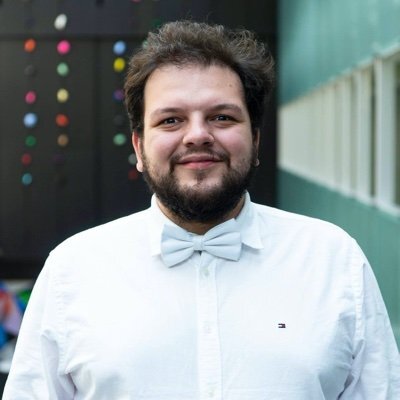
How do large populations of cortical neurons implement memory, decisions, and behavior? I develop low-dimensional theories and data-constrained recurrent models that can be compared with recordings and perturbations.
How do neural networks learn and represent algorithms? I study attractor geometry, abrupt learning, memory mechanisms, stability, and trainability in biological and artificial networks.
Recent work in theoretical neuroscience, mechanistic interpretability, machine learning, and neural data analysis.
In review
Under review
In review
Under review
2026
bioRxiv
2026
bioRxiv
2026
bioRxiv
2026
bioRxiv
2026
Physical Review X
2026
Movement Disorders
2025
NeurIPS · Spotlight
2025
ICML
2025
arXiv
2025
Machine Learning: Science and Technology
2024
bioRxiv
Open-source software now used by hundreds of laboratories.
2024
NeurIPS
2024
Nature
2024
NeurIPS
2023
NeurIPS